Missing Annotations — E0001–E0009
Rules that flag code where type information is absent.
← All Rules | Next: Type Safety →
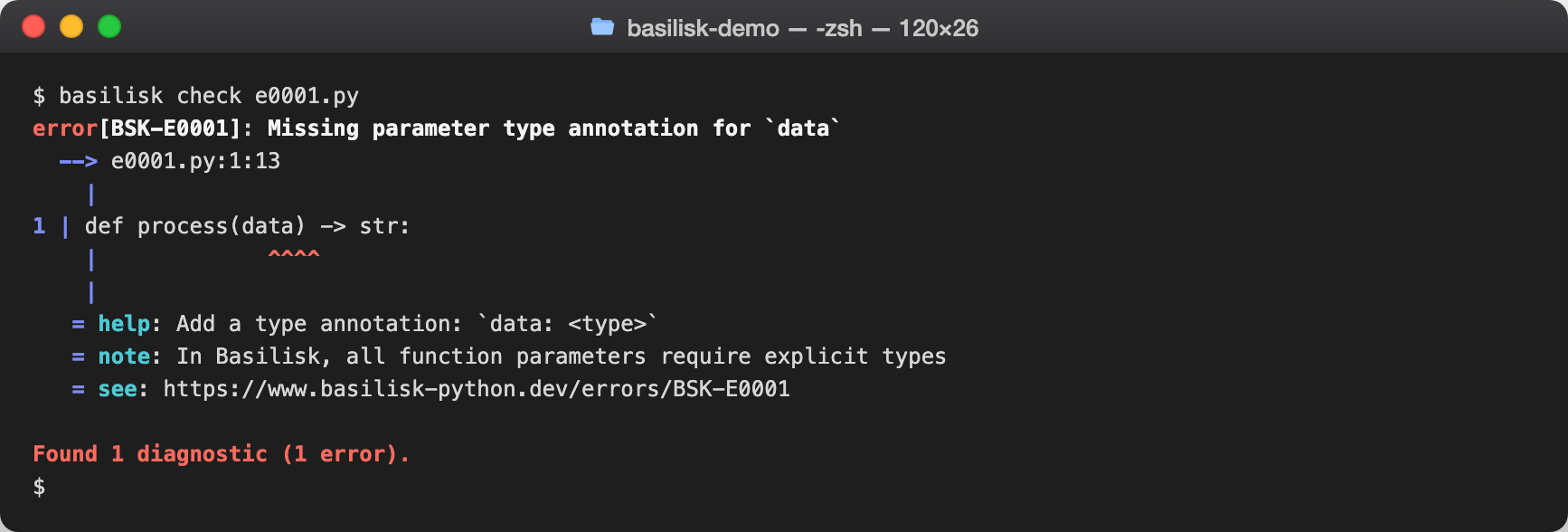
BSK-0001 — Missing parameter type annotation
Every function parameter must have an explicit type annotation.
# Error
def process(data) -> str:
    return data.upper()

# Correct
def process(data: str) -> str:
    return data.upper()
Real basilisk check output:
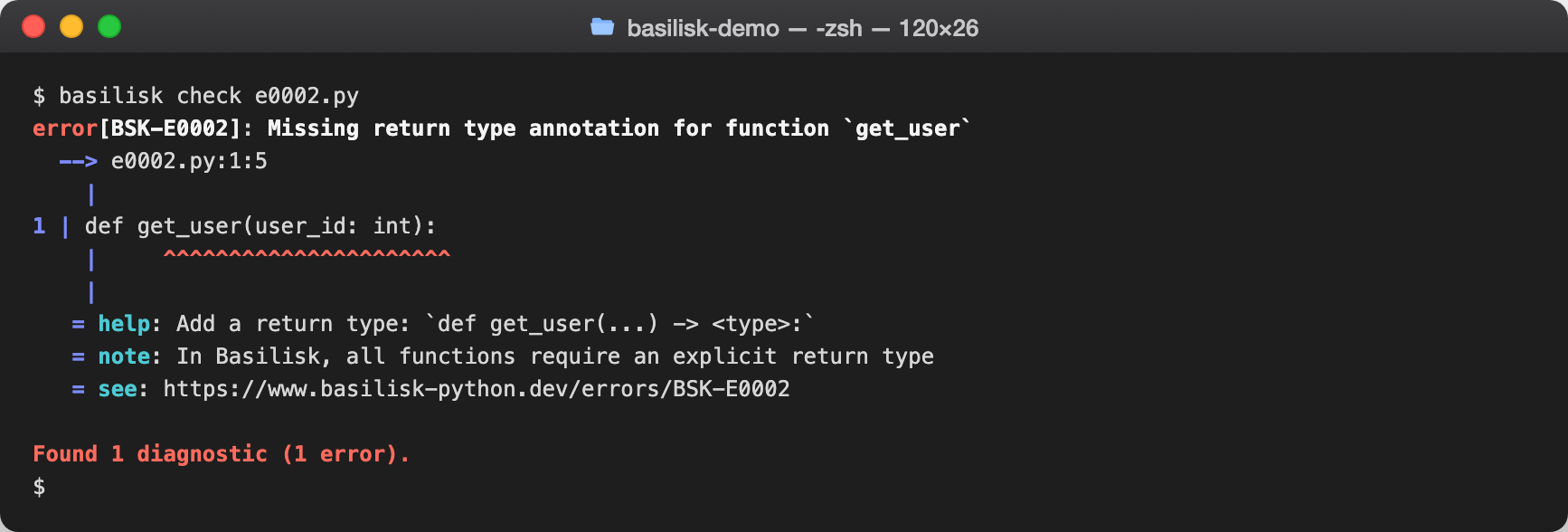
BSK-0002 — Missing return type annotation
Every function must declare its return type.
# Error
def get_user(user_id: int):
    return {"id": user_id}

# Correct
def get_user(user_id: int) -> dict[str, int]:
    return {"id": user_id}
Real basilisk check output:
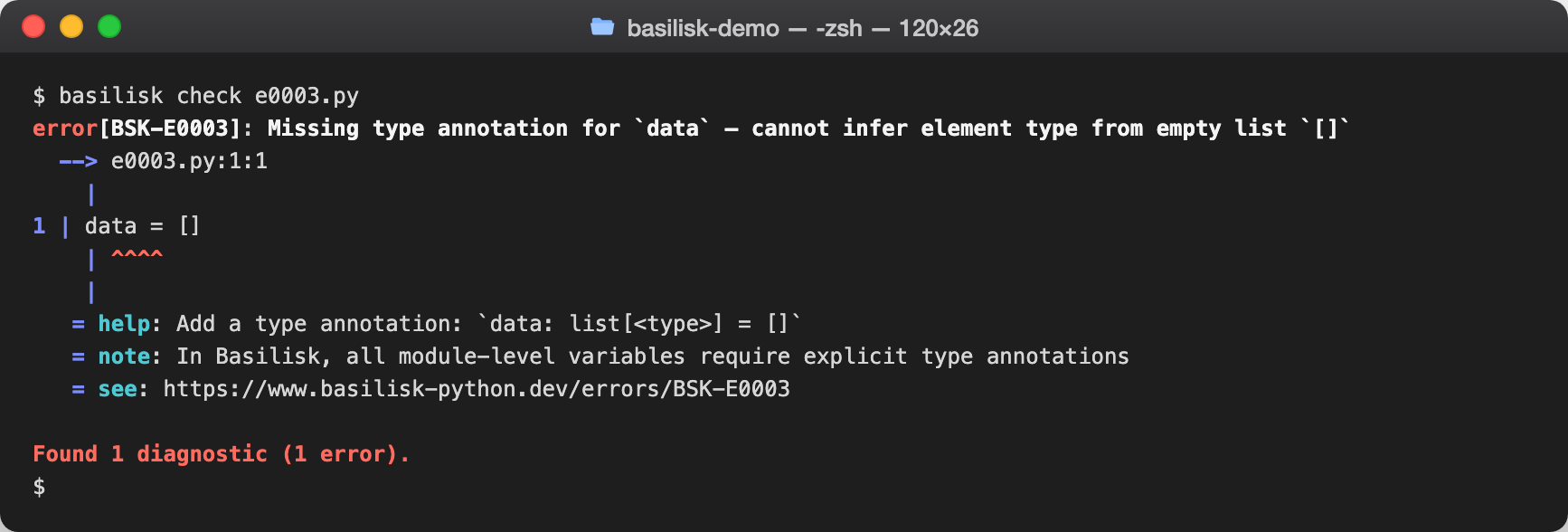
BSK-0003 — Missing variable type annotation
A module-level variable whose type cannot be inferred — for example an empty collection — must carry an explicit annotation.
# Error — element type cannot be inferred from an empty list
data = []

# Correct
data: list[str] = []
Real basilisk check output:
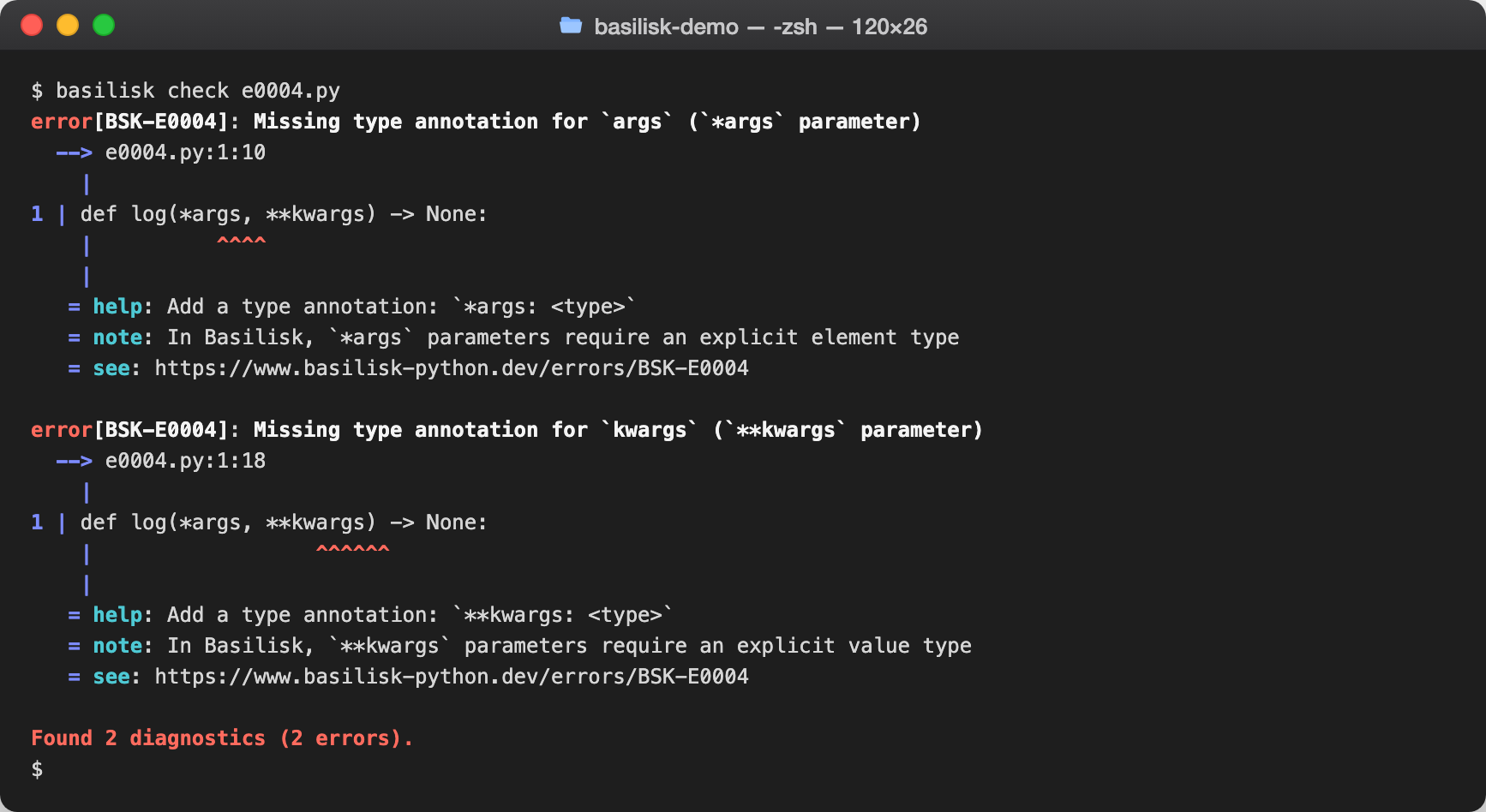
BSK-0004 — Missing *args or **kwargs annotation
Variadic arguments must be annotated.
# Error
def log(*args, **kwargs) -> None:
    print(args, kwargs)

# Correct
def log(*args: str, **kwargs: int) -> None:
    print(args, kwargs)
Real basilisk check output:
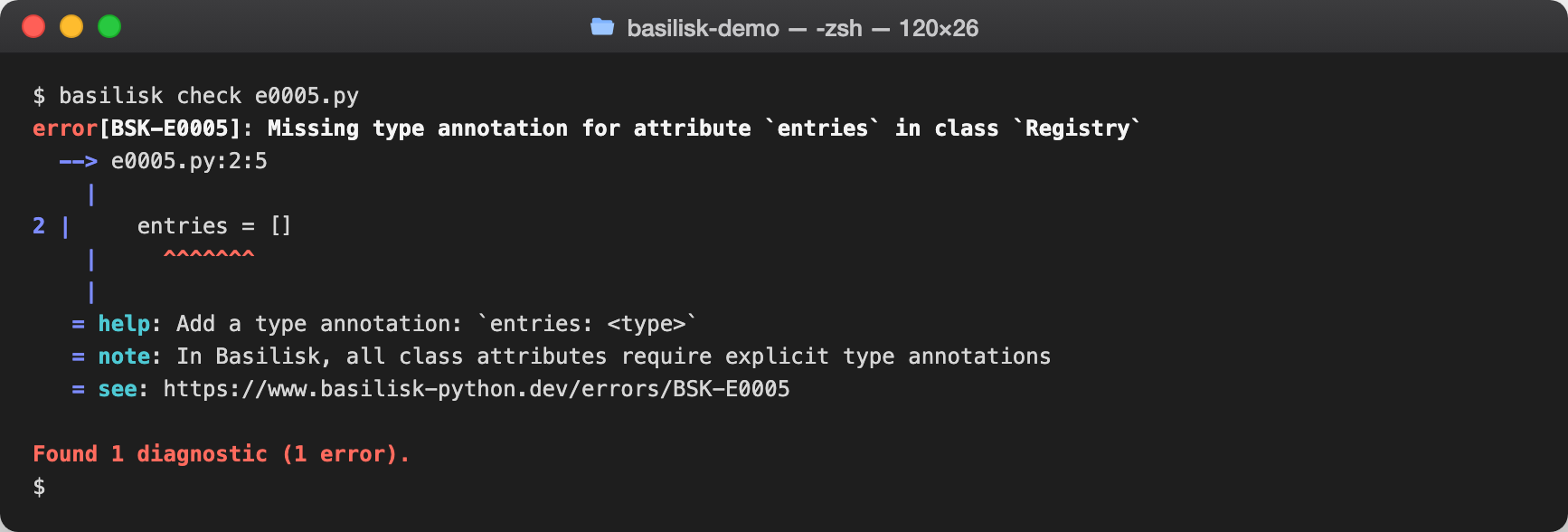
BSK-0005 — Missing class attribute annotation
A class attribute whose type cannot be inferred — for example an empty collection — must be explicitly annotated.
# Error — element type cannot be inferred from an empty list
class Registry:
    entries = []

# Correct
class Registry:
    entries: list[str] = []
Real basilisk check output: